Runtime components
The component view separates interface adapters, application orchestration, domain logic, configuration, and GitHub infrastructure. This makes the shared path between CLI and public ESM consumers explicit.
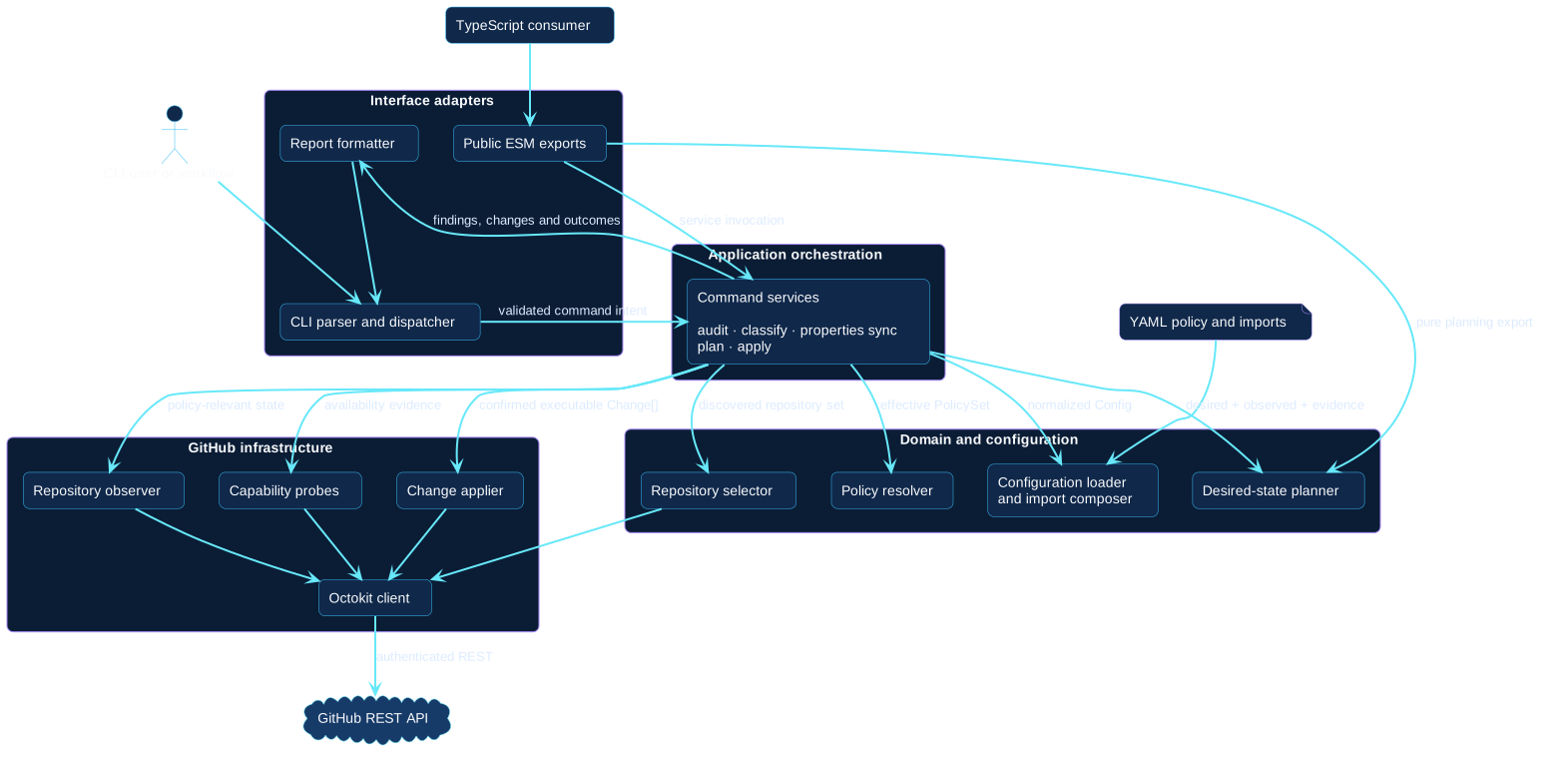
Interface adapters
- CLI parser and dispatcher validates arguments, selects a command, checks authentication requirements, and translates completion into an exit code.
- Public ESM exports expose supported configuration, observation, classification, planning, apply, reporting, and type building blocks.
- Report formatter converts findings, changes, blocks, warnings, and apply outcomes into human-oriented text.
Application services
The command-services component exposes audit, classification, property
synchronization, inspection, membership, plan, and apply operations and owns
their workflow order. apply depends on planning and retains the displayed
Change[]; it does not independently construct another desired-state diff.
The three membership commands are the exception to that shape, and are kept
apart from it: each reads the organization's people, states one intended change
to one person, and asks. They produce no Change and go through no plan. See
octoform members.
Domain and configuration
- The loader composes imports and validates a normalized
Config. - The selector establishes the repository set and filters.
- The resolver produces an effective
PolicySetfor one repository. - The planner compares policy, observed detail, and capability evidence without
performing network calls or mutations. It plans the account itself and each
repository through the same
Changemodel. - The dependency graph orders confirmed changes by what each one waits for, and blocks a dependent whose prerequisite failed. See owner reconciliation.
Domain modules layer in one direction: the GitHub adapters may depend on the domain, and the domain never depends on them. A comparison, a request body and the reasons a change is refused are all decidable without a network.
GitHub infrastructure
The observer gathers only policy-relevant state. Capability probes preserve uncertainty instead of converting opaque responses into availability. The applier groups confirmed executable changes by endpoint behavior.
Two transports sit here. The Octokit client owns REST. A separate GraphQL
transport carries the four repository settings REST does not expose, and
normalizes its failures — including a response that carries data and errors
together under HTTP 200 — into the same vocabulary a REST status produces, so
nothing above this layer can tell which one observed a value it could not read.