migrateConfiguration()
Use-case information
| Attribute | Value |
|---|---|
| Name | migrateConfiguration() |
| Primary actor | Policy author |
| Goal | Convert a document that names its account in a root owner field into the owners shape, as a reviewable diff |
| Level | User goal |
| Type | Secondary, optional |
| Precondition | A configuration file exists, resolves, and no file it imports binds policy to bare repository names at its own root |
| Successful postcondition | The converted document has been shown, or written in place with comments and ordering preserved |
| Failure postcondition | Nothing is written; the reason is reported, naming any file that has to move first |
| Command | octoform config migrate |
Specification diagram
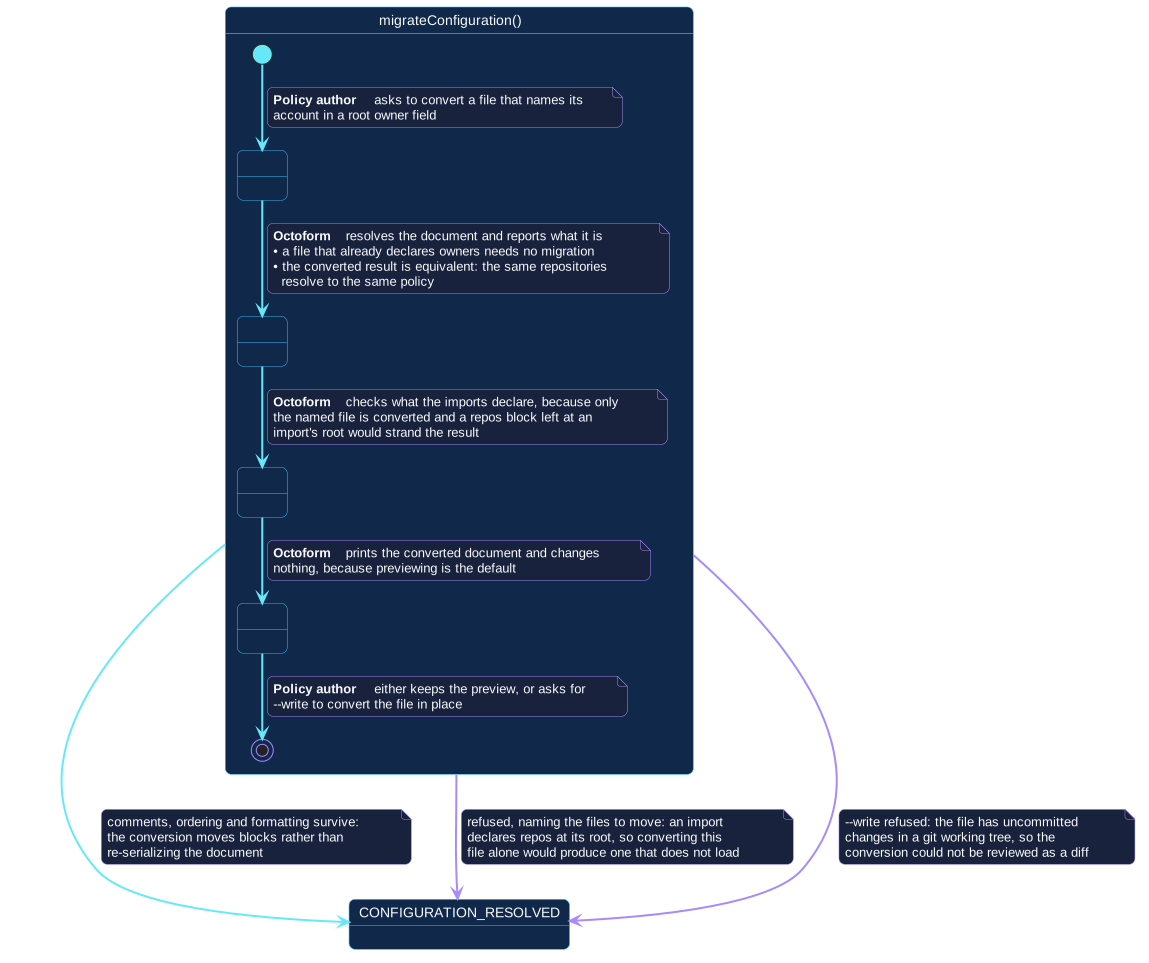
Detailed conversation
| Turn | Party | Exchange |
|---|---|---|
| 1 | Policy author | Asks to convert a file that names its account in a root owner field |
| 2 | Octoform | Resolves the document and reports what it is; a file that already declares owners needs no migration and is reported as such |
| 3 | Octoform | Checks what the imports declare, because only the named file is converted |
| 4 | Octoform | Prints the converted document and changes nothing, because previewing is the default |
| 5 | Policy author | Keeps the preview, or asks for --write |
| 6 | Octoform | Moves the blocks in place, preserving comments, ordering, and formatting |
Why turn 3 exists
Only the file the author names is converted. A repos block at the root of an
imported file therefore stays where it is — and that block is accepted beside
owner while rejected beside owners, because a bare repository name
identifies nothing once more than one account can be in scope.
Converting the root alone would produce a document that no longer loads, so the use case refuses and names the files that have to move first. It does not rewrite them: the author offered one file, and silently editing others would exceed what was asked.
Imports that keep repositories out of their root — declaring types,
classify, audit or defaults instead — are unaffected.
Available since 0.4.1
In 0.4.0 this turn did not exist, and the conversion produced a file that
failed to load on the next command.
Why previewing is the default
The conversion rewrites a file the author is expected to keep under version
control. Defaulting to a preview means the destructive form has to be asked
for, and the tool refuses --write when the file has uncommitted changes in a
git working tree — so the conversion is always reviewable as a diff against a
known state.
Why migration is optional
A single-owner file keeps its exact meaning in this release and produces the same plans. The conversion is offered because the multi-owner shape is where the rest of the release's features live, not because the old shape has been deprecated.
Internal states
| State | Description | Responsibility |
|---|---|---|
RequestingConversion |
The author has asked, nothing has been read | Establish whether conversion applies at all |
Previewing |
The converted document is being presented | Show the whole result, write nothing |
Deciding |
The author is choosing whether to commit to it | Leave the decision with the author |
Connection with the operator context
NO_CONFIGURATION→migrateConfiguration()→CONFIGURATION_RESOLVED
The use case includes validateConfiguration(): a document that does not
resolve cannot be converted, because the conversion has to know what it means.
Vocabulary
Policy author asks, reviews, commits. Octoform resolves, reports, previews, converts. It moves blocks; it does not re-serialize, because re-serializing would discard the comments that make a configuration reviewable.