inspectMembers()
Use-case information
| Attribute | Value |
|---|---|
| Name | inspectMembers() |
| Primary actor | Repository operator |
| Goal | Know who is in the organization, and which of the people the configuration names are not |
| Level | User goal |
| Type | Secondary |
| Precondition | The selected account is an organization; the token can read its membership |
| Successful postcondition | The four listings and the comparison are reported; nothing is changed |
| Failure postcondition | The reason is reported; no listing is presented as complete when it was not |
| Command | octoform inspect members |
Specification diagram
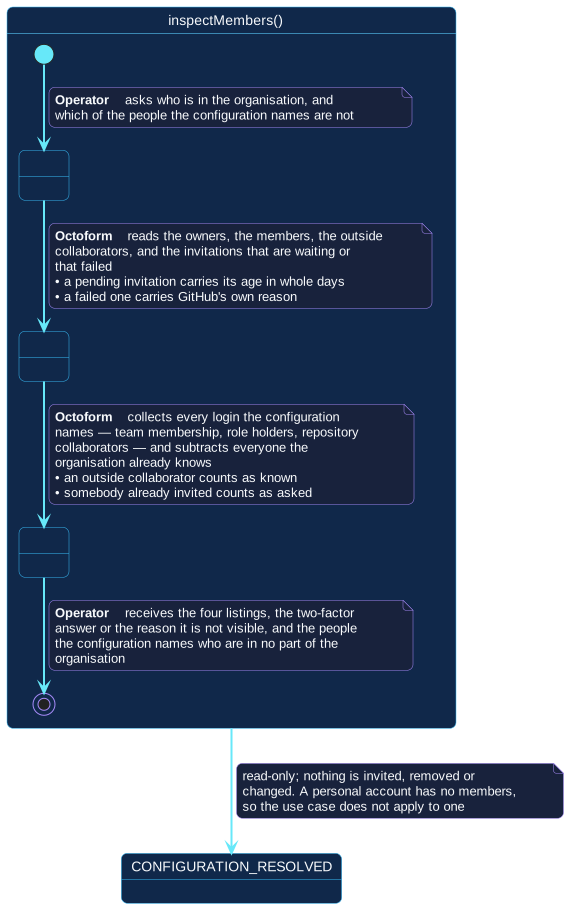
Detailed conversation
| Turn | Party | Exchange |
|---|---|---|
| 1 | Repository operator | Asks who is in the organization, and which of the people the configuration names are not |
| 2 | Octoform | Reads the owners, the members, the outside collaborators, and the invitations that are waiting or that failed |
| 3 | Octoform | Collects every login the configuration names, with the paths that name them, and subtracts everyone the organization already knows |
| 4 | Repository operator | Receives the listings, the two-factor answer or the reason it is not visible, and the people who are in no part of the organization |
The listings are not the point
Every listing here is something GitHub will show anybody with access. What a configuration file adds is the question neither side can answer alone: of the people this file grants things to, which ones are not in the organization at all?
Those are the grants that will turn into invitations. An invitation nobody accepts is access that never arrives while the file goes on claiming it does.
What counts as known
An outside collaborator counts. Having repository access without being a member is a legitimate arrangement, not an omission.
Somebody already invited counts. They have been asked, and asking again is not the finding.
An absence that is not an answer
GitHub answers the two-factor filter only for an organization owner. When the token is not one, the report says so rather than listing nobody: an empty list would read as "everybody has it enabled", which is a different statement and may be untrue.
This is the same discipline that separates unreadable from null everywhere
else in the product, applied to a listing rather than to a field.
Internal states
| State | Description | Responsibility |
|---|---|---|
RequestingInventory |
The operator has asked | Establish the selection and that the account is an organization |
Listing |
The organization's people are being read | Report each listing as read, and never present a partial one as complete |
Comparing |
The configuration's names are being checked against them | Say where each name came from, not only that it appeared |
Connection with the operator context
CONFIGURATION_RESOLVED→inspectMembers()→MEMBERSHIP_REPORTEDCONFIGURATION_RESOLVED→inspectMembers()→CONFIGURATION_RESOLVEDwhen the account is personal, or a listing cannot be read
Vocabulary
Repository operator asks, receives. Octoform reads, compares, reports. It invites nobody, and changes nothing.