applySavedPlan()
Use-case information
| Attribute | Value |
|---|---|
| Name | applySavedPlan() |
| Primary actor | Change reviewer |
| Goal | Carry out exactly the plan that was approved, or refuse and say why |
| Level | User goal |
| Type | Primary, essential to the 0.4 release |
| Precondition | A saved plan exists; a token with sufficient permission is available |
| Successful postcondition | Every recorded operation was attempted and its outcome reported |
| Failure postcondition | Nothing is attempted; the failing check is named and the run exits 2 |
| Command | octoform apply --plan <path> |
Specification diagram
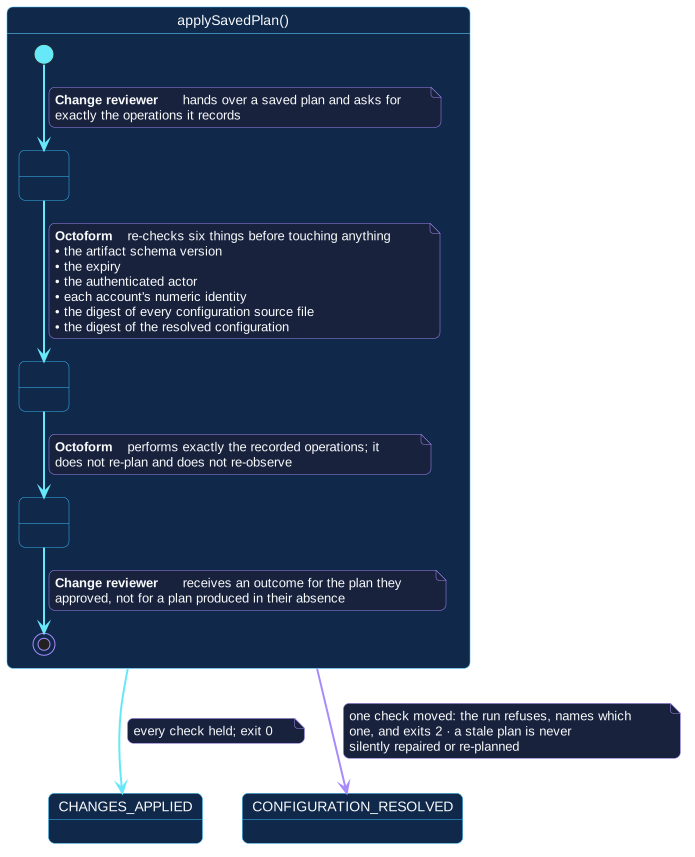
Detailed conversation
| Turn | Party | Exchange |
|---|---|---|
| 1 | Change reviewer | Hands over a saved plan and asks for exactly the operations it records |
| 2 | Octoform | Re-checks six things before touching anything |
| 3 | Octoform | Performs exactly the recorded operations, without re-planning and without re-observing |
| 4 | Change reviewer | Receives an outcome for the plan they approved |
The six checks
| Check | What a failure means |
|---|---|
| Artifact schema version | The file was produced by an incompatible release |
| Expiry | The observation behind the plan is too old to act on |
| Authenticated actor | A different identity is applying than the one that planned |
| Account numeric identity | An account was renamed, replaced, or is not the one that was planned against |
| Configuration source digests | A contributing file changed after the plan was reviewed |
| Resolved configuration digest | The document means something different now, however it is written |
A failure names which check failed. The run refuses; a stale plan is never silently repaired and never quietly re-planned into something else.
Why refusing is the feature
The purpose of the artifact is that the second command cannot exceed the first. If a check could be waived, the approval would no longer bound the execution and the separation of duties would be decorative. Refusal is therefore the correct outcome, not an inconvenience: it means the world moved and the approval no longer describes it.
The remedy is always the same. Plan again, review the new plan, hand over the new artifact.
Internal states
| State | Description | Responsibility |
|---|---|---|
PresentingArtifact |
The plan file has been supplied | Read it without trusting it |
Verifying |
Six checks are being run | Refuse on the first that does not hold, and name it |
Executing |
Recorded operations are being attempted | Perform exactly what is recorded, no more |
Connection with the operator context
PLAN_SAVED→applySavedPlan()→CHANGES_APPLIEDPLAN_SAVED→applySavedPlan()→CONFIGURATION_RESOLVEDwhen a check does not hold
This is the only transition in the context that crosses invocations, and the artifact is what makes it possible.
Vocabulary
Change reviewer hands over, receives. Octoform verifies, refuses, performs, reports. It does not re-plan, does not re-observe, and does not negotiate a failed check.
References
octoform applysavePlan(), which this use case includes- Apply and verify