Container view
In this view, a container is a separately executing or stored unit, not necessarily a Docker image. Octoform runs as one Node.js process whether invoked through its CLI or imported as an ESM library.
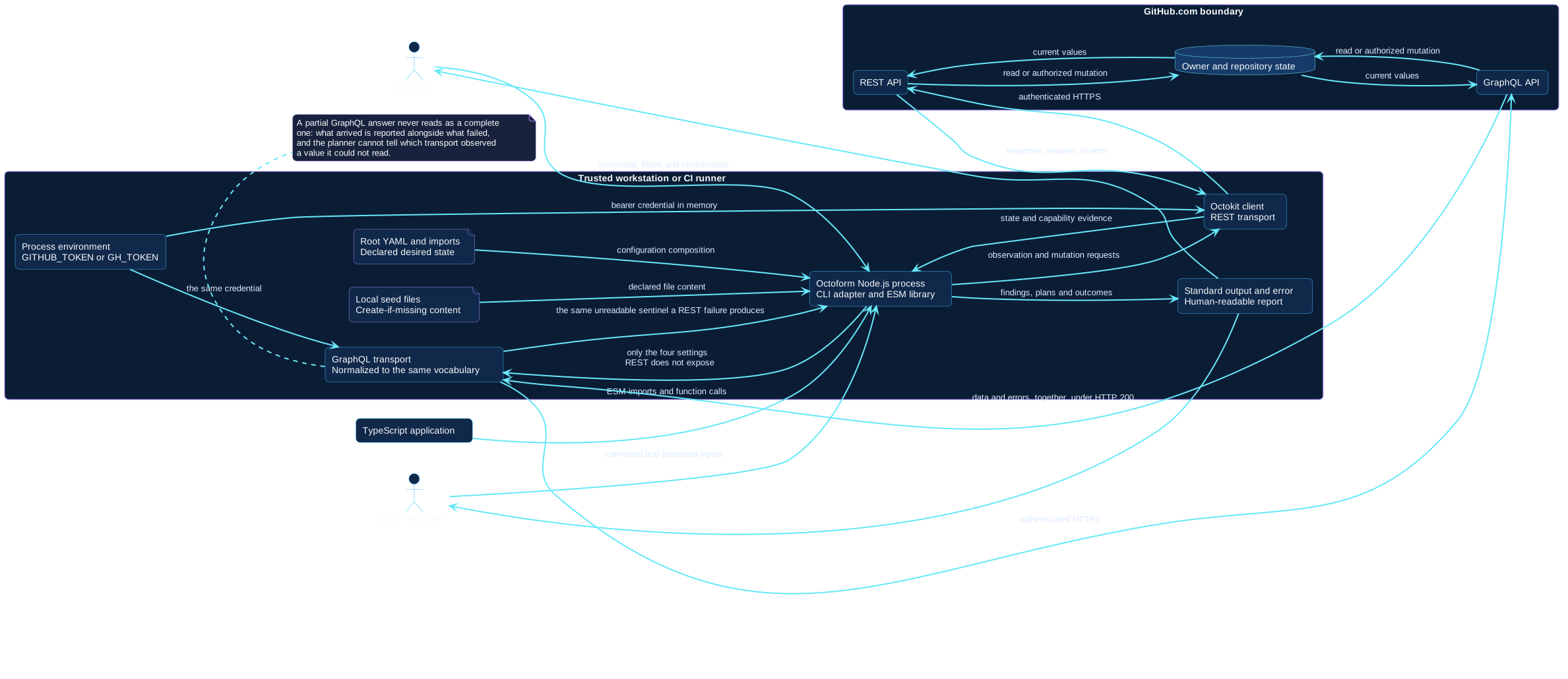
Runtime containers and stores
| Element | Boundary |
|---|---|
| Octoform Node.js process | Executes CLI adapters, exported services, domain planning, and apply orchestration in memory. |
| Root YAML and imports | Version-controlled desired state managed by the operator or checked-out workflow revision. |
| Local seed files | Content read only when an effective files policy names it. |
| Process environment | Supplies GITHUB_TOKEN or GH_TOKEN; configuration cannot carry a token. |
| Octokit client | Adds authentication and transports REST requests over HTTPS. |
| GraphQL transport | Carries the four settings REST does not expose, using the same credential, and normalizes its failures into the same vocabulary. |
| Standard output and error | Carries human-readable repository details, plans, failures, and exit status context. |
| GitHub state | External source of truth for identity, permissions, repositories, settings, and resource outcomes. |
Two transports, one vocabulary
Available since 0.5.0
Four repository settings exist only in GitHub's GraphQL API:
features.sponsorships, features.pull_requests, repo.issue_creation
and repo.pull_request_creation. A configuration that manages none of them
makes no GraphQL request at all.
The second transport is a container rather than a detail because GraphQL fails differently, and the difference had to be contained somewhere:
- A GraphQL response can carry data and errors together, under HTTP
200. A request therefore reports what arrived alongside what failed, instead of letting a partial observation read as a complete one. - Failures are reduced to the same vocabulary a REST status carries, and an unrecognized error type is treated as unavailable rather than as a confirmed absence.
- One failed field narrows to the same unreadable sentinel a REST read produces, so the planner blocks it for the same reason and cannot tell which transport observed it.
- Reads are retried only while every failure is transient and nothing arrived. A mutation is never retried, because a mutation that timed out may have happened.
A change to one of the four is blocked rather than attempted when the repository's GraphQL node identity could not be read.
Deployment consequences
There is no Octoform server, database, or queue in 0.5. The only thing that
outlives the process is a plan the operator asked for with plan --out: a
file, not a service, which a later apply --plan verifies before acting on.
Without it, process exit loses the computed plan and a later invocation
observes and plans again. Configuration history belongs in version control,
while applied state and mutation audit evidence belong to GitHub.
See trust and data flow for disclosure and credential implications.