Runtime behaviour
Three scenarios show how the pieces cooperate. Each one is a rule you can rely on.
Adding a use case
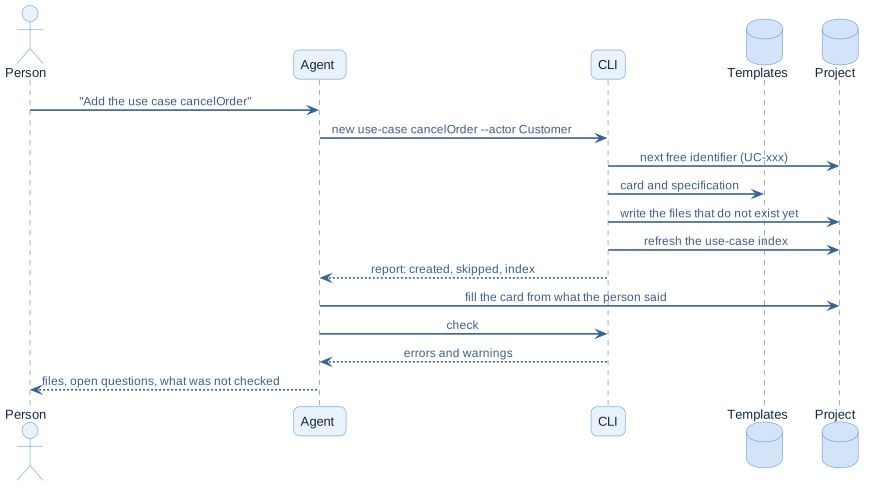
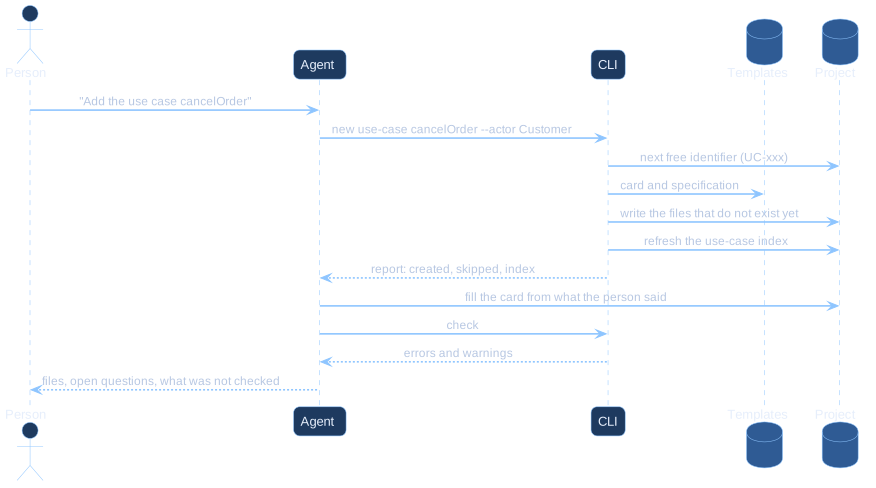
- The person states the use case in plain language.
- The agent runs
new use-casewith what it knows: actor, package, goal. - The CLI chooses the next free identifier by reading the existing cards, writes only the files that do not exist yet, and regenerates the index from the cards.
- The agent fills the card from what the person said. Whatever the person did not say becomes an open question.
- The agent runs
checkand reports the files, the open questions and what was not checked.
Two properties follow. Running the command twice never overwrites work, because existing files are skipped. And the index is always derived from the cards, never edited by hand.
Rendering diagrams
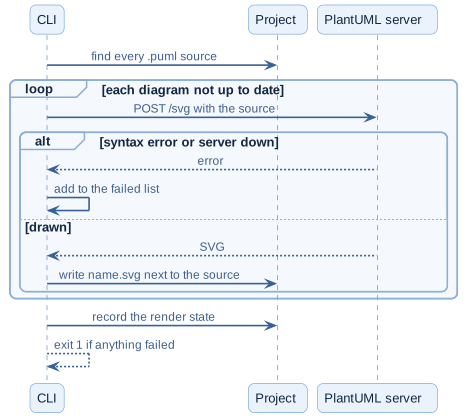
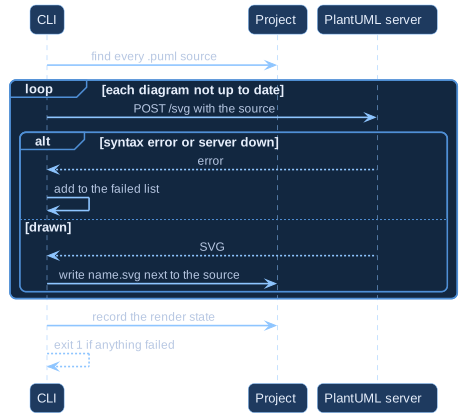
- A diagram is up to date when its SVG is newer than its source;
--forceredraws everything, and a change of palette does so automatically. - A failure of one diagram never stops the others. The report lists what was drawn,
what was skipped and what failed, and the exit code is
1when anything failed. - The SVG is written to a temporary file and moved into place, so an interrupted run never leaves half an image.
Starting the CLI
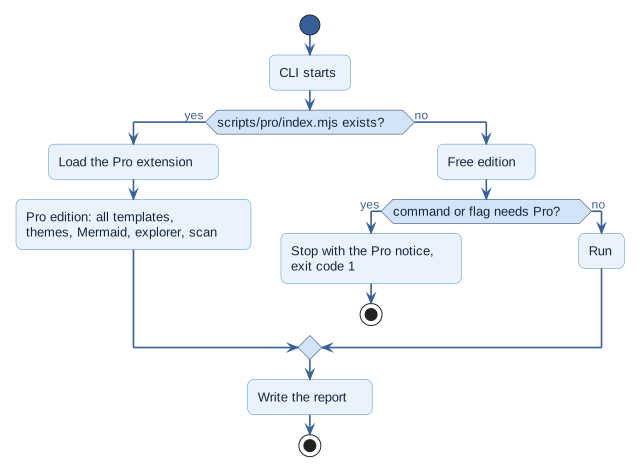
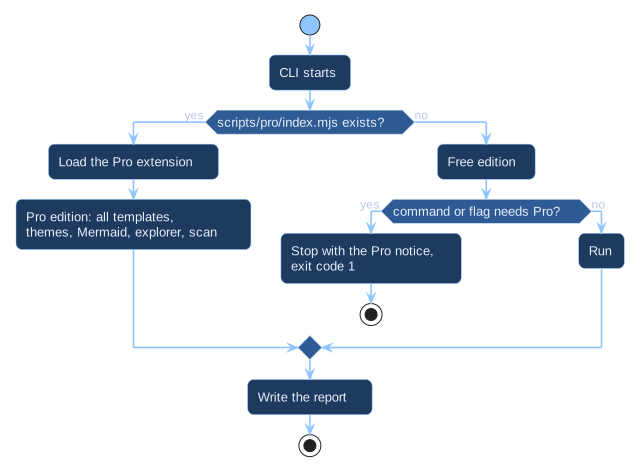
The edition is decided once, at start, by one file. A command that needs Pro never half-runs in the free edition: it stops before doing any work and says which part is missing.
The report
Every command ends with a report: a title, then labelled values and lists. The same shape is used by all commands so an agent can read any of them the same way.