Domain model
The domain separates desired configuration from observed GitHub state.
Planning produces an explicit Change; applying produces an outcome linked to
that change rather than mutating the desired or observed models in place.
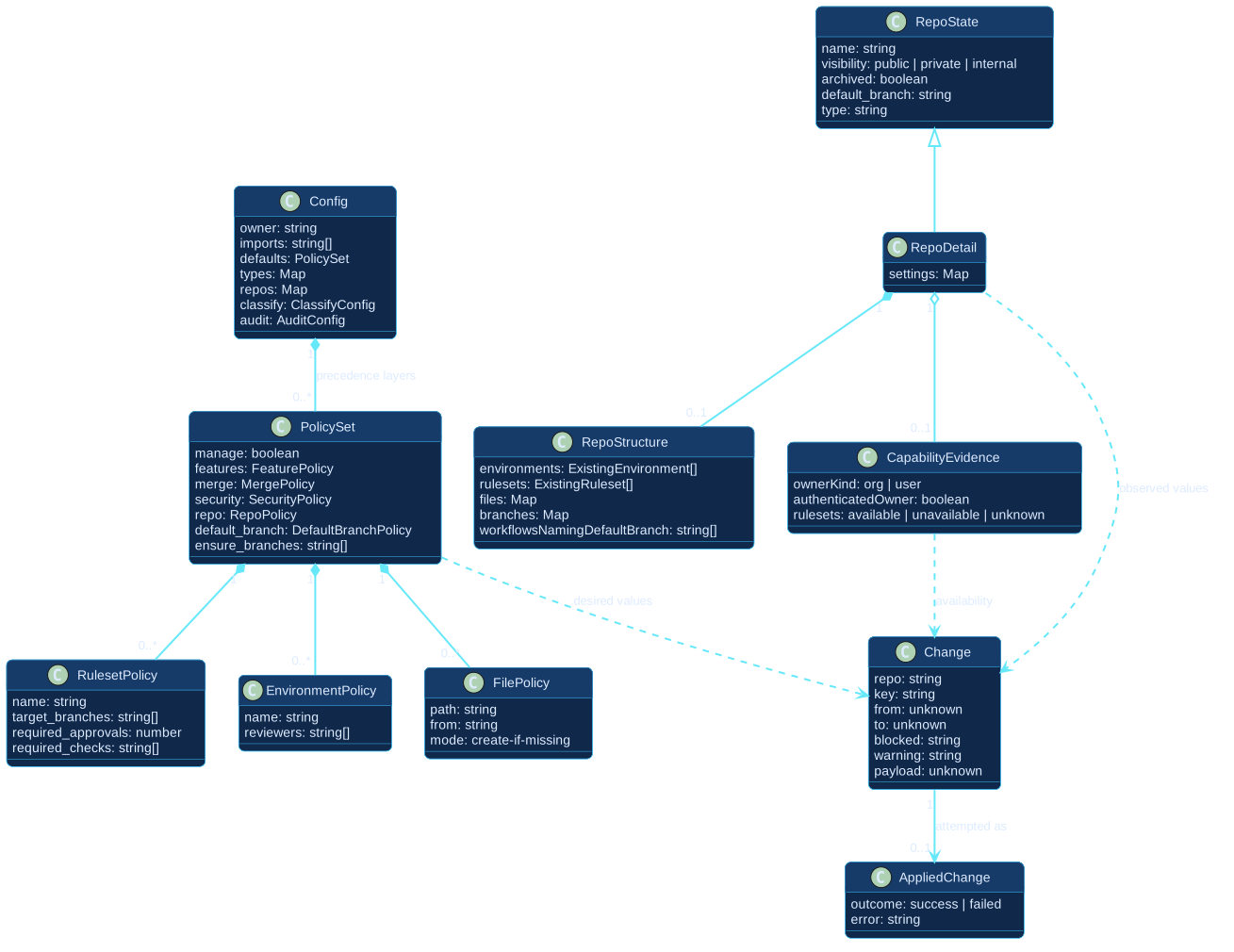
Declared-state concepts
| Concept | Definition |
|---|---|
Config |
Composed and validated root intent for one owner, including precedence layers, classification, audit, and exclusions. |
PolicySet |
Desired fields applicable at defaults, type, or named-repository scope. |
RulesetPolicy |
One active branch ruleset reduced to the fields Octoform manages. |
EnvironmentPolicy |
One named environment and optional required user reviewers. |
FilePolicy |
One local-to-repository create-if-missing file declaration. |
Observed-state concepts
| Concept | Definition |
|---|---|
RepoState |
Inventory-level repository identity, visibility, archive status, default branch, metadata, and resolved type. |
RepoDetail |
RepoState plus requested current settings and optional structural resources needed by planning. |
RepoStructure |
Policy-driven observations of rulesets, environments, branch existence, file existence, and workflows naming the default branch. |
CapabilityEvidence |
Owner and response evidence used to decide whether an operation is available, unavailable, or still unknown. |
An unreadable setting is distinct from null. null can be a real GitHub
value, while unreadable means Octoform cannot establish current state safely.
Planning and execution concepts
| Concept | Definition |
|---|---|
Change |
One difference with repository, key, current and desired values, plus optional block, warning, or endpoint payload. |
AppliedChange |
Success or failure outcome for an attempted executable change. |
Blocked changes remain Change instances so reports preserve intent and
reason. They have no AppliedChange because the applier never receives them.
See state models for the lifecycle.