Container view
In this view, a container is a separately executing or stored unit, not necessarily a Docker image. Octoform runs as one Node.js process whether invoked through its CLI or imported as an ESM library.
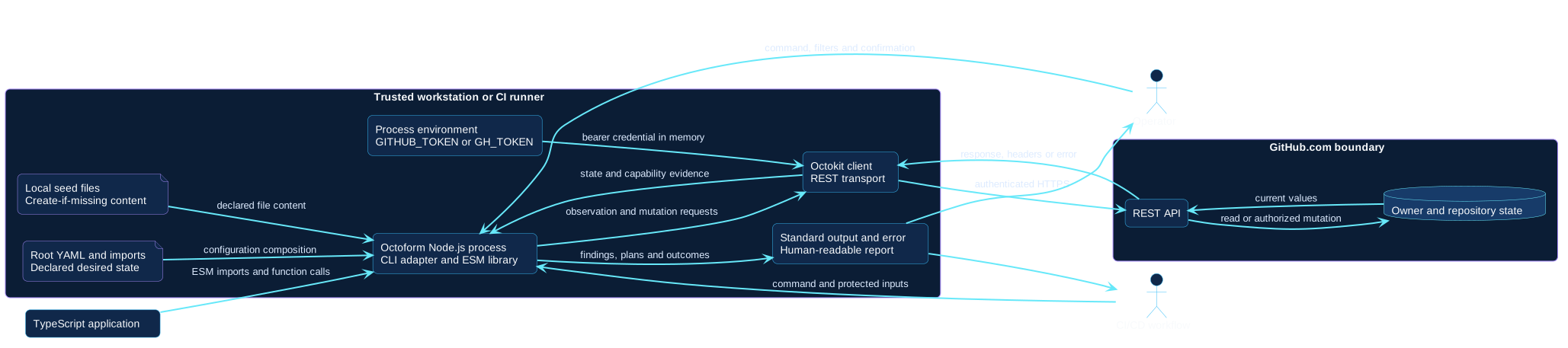
Runtime containers and stores
| Element | Boundary |
|---|---|
| Octoform Node.js process | Executes CLI adapters, exported services, domain planning, and apply orchestration in memory. |
| Root YAML and imports | Version-controlled desired state managed by the operator or checked-out workflow revision. |
| Local seed files | Content read only when an effective files policy names it. |
| Process environment | Supplies GITHUB_TOKEN or GH_TOKEN; configuration cannot carry a token. |
| Octokit client | Adds authentication and transports REST requests over HTTPS. |
| Standard output and error | Carries human-readable repository details, plans, failures, and exit status context. |
| GitHub state | External source of truth for identity, permissions, repositories, settings, and resource outcomes. |
Deployment consequences
There is no Octoform server, database, queue, or persisted plan service in
0.3. Process exit loses the computed plan. A later invocation observes and
plans again. Configuration history belongs in version control, while applied
state and mutation audit evidence belong to GitHub.
See trust and data flow for disclosure and credential implications.